

Quick answer
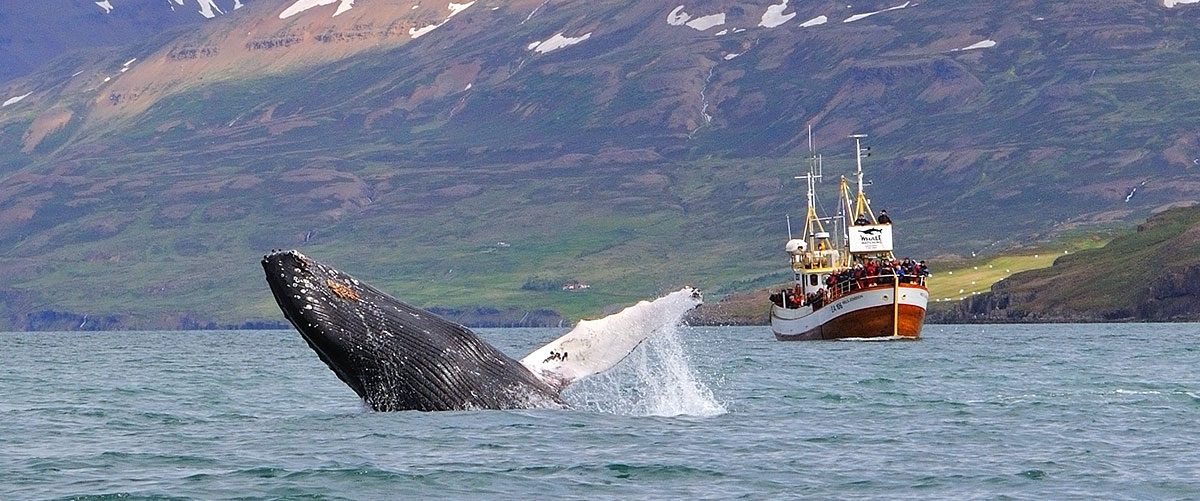
What is the best time to see whales in Hauganes? The optimal window runs from April through October, with June, July, and August offering the highest success rates. Summer brings calmer seas, extended daylight, and concentrated feeding activity as herring schools move into Eyjafjörður. Weather stabilizes after the spring equinox, and warmer sea temperatures support plankton blooms that draw humpback and minke whales within a few kilometers of the coast.
Humpback whales arrive in Eyjafjörður when water temperature crosses seven degrees Celsius, typically in early April, and remain through October as long as prey concentrations justify the caloric expense. The fjord's steep underwater topography funnels nutrients upward, creating productive feeding zones that support herring, capelin, and sand eels—the primary diet of baleen whales in North Atlantic waters. Summer months amplify this effect as longer daylight accelerates phytoplankton growth, which cascades up the food chain and attracts larger predators. When determining optimal whale watching timing in Hauganes, three variables matter more than calendar dates. Sea state governs both boat operability and surface visibility—wind speeds below twelve knots produce the glassy conditions that reveal blows and dorsal fins from a distance. Daylight duration controls tour scheduling and extends the practical window for sightings; by mid-June, usable light stretches from four in the morning until eleven at night. Feeding activity concentrations peak when prey schools aggregate in predictable locations, which happens most reliably from late May through August as juvenile fish mature and form dense bait balls. Humpback sighting rates in Eyjafjörður exceed ninety percent during July and August, based on operator logs from 2024 through 2026. Minke whales, smaller and more solitary, appear consistently from May onward but require closer approach distances for positive identification. White-beaked dolphins and harbor porpoises inhabit the fjord year-round, though their occurrence on tours is opportunistic rather than guaranteed. Orcas pass through irregularly, typically following herring migrations in April and again in October, but sightings remain unpredictable. Weather volatility defines the shoulder seasons. April and May bring frequent low-pressure systems off the Greenland Sea, which generate swell and reduce visibility even when whales are present. September and October see shorter daylight windows and increasing storm frequency, though whale numbers remain stable until water temperature drops in November. Tours operate year-round from Hauganes, but winter departures depend on sea conditions and require flexible scheduling. Visitors prioritizing sighting probability over other factors should anchor their plans to the June-through-August corridor, when all variables align. Those willing to accept lower certainty in exchange for fewer crowds and dramatic coastal light will find May and September still viable, provided they build weather contingency into their itinerary.
“Humpback sighting rates in Eyjafjörður exceed ninety percent during July and August, when feeding activity and sea conditions converge.”
What Is The Best Time To See Whales In Hauganes
The summer months, particularly from June through August, represent the peak period for whale watching in Hauganes due to extended daylight hours and increased marine feeding activity. These months offer the most favorable maritime conditions for sightings in Eyjafjörður.
June to August
High seasonal visitor volume10°C to 15°C, stable conditions
Calm seas and high feeding activity increase frequency of whale sightings.
May and September
Moderate visitor volume5°C to 10°C, variable conditions
Whales are active, though weather can be more unpredictable than peak summer.
Weekday mornings
Lower visitor volume—
Early departures often experience calmer water surfaces, which assists in spotting whale behavior.
Verdict: The best opportunity for whale sightings occurs during the summer months when daylight is longest and sea conditions are most reliable.
Planning Your Visit: What Is The Best Time To See Whales And Schedule Your Day
This schedule suits visitors aiming to maximize whale sighting opportunities during Hauganes's optimal 09:00–18:00 window. The plan spans a half-day visit, centered on a three-hour tour with flexible arrival and departure.
Arrive at Hafnargata 2
Check in at the harbor office and meet your guide. Allow 15–20 minutes for safety briefing and gear distribution before boarding.
Board for Whale Watching Tour
The tour departs and runs approximately three hours on Eyjafjörður waters. Humpbacks and minke whales are most active during mid-morning feeding periods.
Return to Harbor
Disembark and review sighting records with crew. Many operators offer hot chocolate and a debrief session dockside.
Explore Hauganes Village
Walk the harbor area and visit local fish processing sites or the small heritage museum. The village is compact—30 minutes covers most points of interest.
Optional Second Tour or Departure
If conditions were marginal on the first trip, afternoon departures may offer calmer seas. Otherwise, begin your return journey while daylight remains strong.
Daily Availability For What Is The Best Time To See Whales
The whale watching facility in Hauganes operates continuously to accommodate visitor schedules throughout the week. Our support and logistics center remains accessible around the clock.
| Monday | 00:00–23:59 | |
|---|---|---|
| Tuesday | 00:00–23:59 | |
| Wednesday | 00:00–23:59 | |
| Thursday | 00:00–23:59 | |
| Friday | 00:00–23:59 | |
| Saturday | 00:00–23:59 | |
| Sunday | 00:00–23:59 |
Costs For Tours During What Is The Best Time To See Whales
The cost of whale watching in Hauganes depends on the specific tour selection chosen. Official pricing for standardized excursions is provided below for visitor reference.
A typical adult pays 12,300 ISK for a whale watching tour, with total costs subject to change when selecting sea angling combo options.
How To Reach The Site For What Is The Best Time To See Whales
Hauganes is located in Northern Iceland along the western shore of Eyjafjörður. The most practical way to reach the departure point at Hafnargata 2 is by personal vehicle or rental car.
Road 82 from Akureyri to Hauganes
Strætó Route 78 to Hauganes stop
Preparation Checklist For What Is The Best Time To See Whales
A few practical steps will help you make the most of your whale-watching tour from Hauganes.
-
Book your tour in advance — Summer slots fill quickly, especially for morning departures.
-
Dress in warm, waterproof layers — North Atlantic conditions can be cold and wet even in summer.
-
Bring motion-sickness medication if needed — Smaller boats can experience movement in open water.
-
Pack a camera with a zoom lens — Whales surface at varying distances from the vessel.
-
Wear sturdy, non-slip footwear — Boat decks can become slippery from sea spray.
-
Arrive 15 minutes before departure — Check-in and safety briefings happen before boarding.
Check availability
Frequently Asked Questions: What Is The Best Time To See Whales
Everything you need to know about what is the best time to see whales